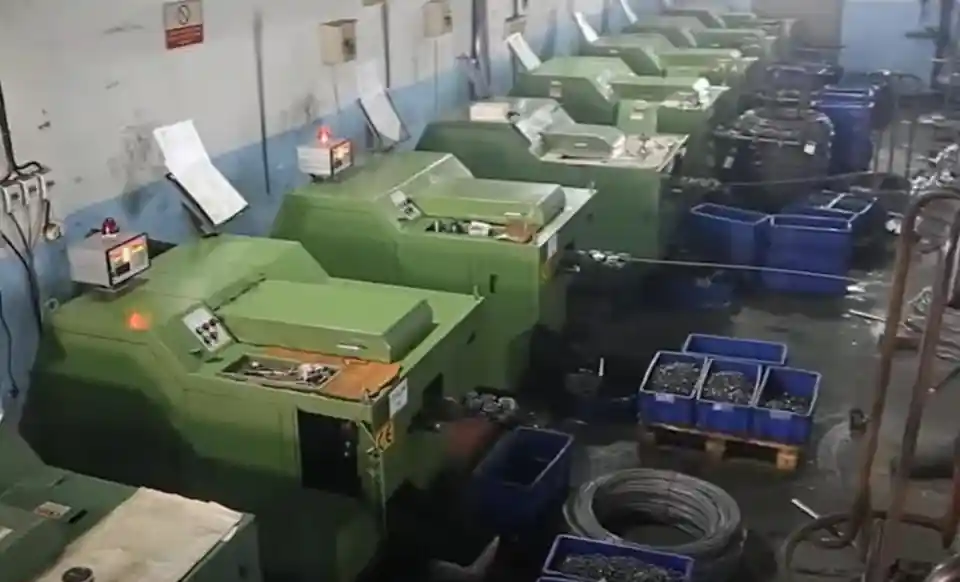
Self-Drilling Screw Manufacturer
TIGHTU manufactures and supplies self-drilling screws that drill, form a mating thread, and fasten compatible materials during one installation sequence.
The product scope includes hex washer, pan, countersunk, low-profile, winged, sealing-washer, heavy-duty, and custom configurations. Define the material stack, total drilling thickness, drill-point requirement, thread, head, drive, material, and finish for project review.
- Standard-based and drawing-based screw projects
- Head, drill point, thread, material, and finish coordination
- OEM/ODM support based on drawings, samples, and application requirements
What Is a Self-Drilling Screw?
A self-drilling screw has a drill-shaped point that creates a pilot hole in a compatible substrate before the threaded section forms the mating thread. This combines drilling and fastening in one installation sequence.
The drill point must pass completely through the material stack before the main threads engage. The point geometry, drilling capacity, thread length, head style, drive, material, and finish must therefore be selected as one system.
A self-drilling screw is different from an ordinary self-tapping screw. A self-tapping screw forms or cuts a mating thread but may still require a drilled, punched, or molded pilot hole.
Self-Drilling Screw Types
Choose the configuration according to the material combination, total drilling thickness, required thread engagement, head clearance, driver access, and environmental conditions.
Hex Washer Head Self-Drilling Screws
An external hex drive and broad bearing surface make this configuration a practical starting point for metal panel and structural sheet connections. Flanged, serrated, or washer-compatible versions may be considered according to the assembly.
Selection points: drill point, material stack, hex size, bearing surface, washer requirement, material, and finish.
Pan Head Self-Drilling Screws
A rounded top and flat bearing surface suit assemblies where the head remains visible and a recessed drive is preferred.
Selection points: drive type, head diameter, drill-point length, material thickness, thread engagement, and finish.
Flat / Countersunk Head Self-Drilling Screws
The countersunk head seats into a prepared recess to produce a flush or near-flush installation surface.
Selection points: countersunk geometry, head diameter, drill point, drive, substrate, and referenced standard or drawing.
Wafer / Modified Truss / Pancake Head Self-Drilling Screws
These low, wide head profiles provide a broader contact area while limiting head projection above the assembly surface.
Selection points: head diameter, available clearance, sheet strength, drive, drill point, and clamp requirement.
Winged / Reamer Self-Drilling Screws
Wings or reaming features create clearance through an upper material before breaking away or completing the connection in a metal substrate.
Selection points: upper-material thickness, metal thickness, wing geometry, drill-point length, head style, and required thread engagement.
Sealing Washer / Roofing Self-Drilling Screws
This configuration combines a self-drilling screw with a sealing washer for panel joints that require coverage around the entry point or an application-specific sealing interface.
Selection points: washer construction, contact surface, compression condition, drill point, substrate, material, finish, and environment.
Heavy-Duty Self-Drilling Screws
Heavy-duty configurations use drill points selected for thicker material stacks or multiple metal layers. The required drilling capacity must be verified for the specific screw design.
Selection points: total drilling thickness, drill-point geometry, thread engagement, head style, installation tool, material, and finish.
Custom Self-Drilling Screws
Custom self-drilling screws can be developed from a drawing, sample, material stack, or assembly requirement when a standard drill point, thread, head, drive, material, or finish does not fit the application.
Selection points: controlled drawing, material combination, total drilling thickness, critical dimensions, material, finish, quantity, and installation conditions.
Prevent Common Self-Drilling Screw Selection Mismatches
Drill Point and Material Stack
The drill point must pass through the complete drilling thickness before the main threads engage. A point selected only by screw diameter may be unsuitable for the actual combination of metal layers.
Drilling Capacity and Thread Engagement
A longer drill point does not automatically provide the correct joint. The screw must also leave enough threaded length to engage the supporting material after drilling is complete.
Head and Bearing Surface
Hex washer, pan, countersunk, wafer, truss, and pancake heads distribute force differently and require different installation clearances. Select the head according to the contact surface and assembly geometry.
Material, Finish, and Environment
The screw material and finish must be reviewed with the connected materials and service environment. Corrosion exposure and dissimilar-metal contact cannot be resolved by head style or drill-point selection alone.
Self-Drilling or Self-Tapping?
Use a self-drilling screw when the fastener must create the pilot hole. Use a self-tapping screw when a suitable pilot hole already exists or is created in a separate operation.
Compare Self-Drilling Screw Configurations
| Configuration | Primary Difference | Suitable Selection Conditions | Important Checks |
|---|---|---|---|
| Hex washer head | External hex drive with broad bearing surface | Metal panels, sheet connections, and assemblies requiring tool engagement around the head | Drill point, material stack, bearing area, washer, material, and finish |
| Pan head | Rounded raised head with recessed drive | Equipment covers, brackets, and general sheet assembly | Head clearance, drive access, drill point, and thread engagement |
| Flat / countersunk head | Head seats into a countersunk recess | Assemblies requiring a flush or near-flush surface | Countersunk geometry, head angle, substrate, drill point, and standard |
| Wafer / truss / pancake head | Low, wide bearing profile | Thin sheet, framing, and space-limited assemblies | Head diameter, sheet strength, clearance, and clamp condition |
| Winged / reamer | Wings or reaming features create upper-material clearance | Wood or similar upper material connected to a metal substrate | Upper-material thickness, metal thickness, wing action, and drill-point length |
| Sealing washer | Washer supports coverage around the entry point | Roofing, cladding, panel, and other weather-exposed joint directions | Washer compatibility, contact surface, compression, and environment |
| Heavy-duty drill point | Drill point selected for thicker or multi-layer material stacks | Metal-to-metal assemblies beyond ordinary thin-sheet drilling conditions | Total drilling thickness, point geometry, threaded length, and installation tool |
| Custom self-drilling | Drawing- or sample-based geometry | Nonstandard drill point, head, thread, material, finish, or assembly condition | Controlled drawing, material stack, critical dimensions, quantity, and validation requirements |
This comparison provides a starting point. Final selection must be based on product-specific drill-point data, the actual material stack, required thread engagement, installation equipment, and service environment.
Build a Complete Self-Drilling Screw Specification
| Specification Area | What to Define | Why It Matters |
|---|---|---|
| Material combination | Metal-to-metal, wood-to-metal, metal-to-wood, or another compatible assembly | Establishes the drilling and fastening sequence |
| Total drilling thickness | Combined thickness of every layer the drill point must penetrate | Determines the required drill-point capability |
| Supporting-material thickness | Thickness available for thread engagement | Helps determine thread length and joint configuration |
| Drill point | Required point geometry or product-specific drilling range | Controls pilot-hole creation |
| Thread | Diameter, pitch, thread length, and applicable standard | Must provide suitable engagement after drilling |
| Head style | Hex washer, pan, countersunk, wafer, truss, pancake, or custom | Determines clearance, bearing area, and surface condition |
| Drive | External hex, Phillips, square, six-lobe, or another required interface | Must match installation access and tooling |
| Washer | No washer, sealing washer, or another specified washer assembly | Affects bearing and sealing-interface requirements |
| Material | Required material and grade | Must suit drilling requirements and the service environment |
| Finish | Plating, coating, passivation, appearance, or another surface requirement | Must be coordinated with the base material and connected components |
| Installation process | Tool, speed, access, orientation, and assembly conditions | Influences drilling and fastening consistency |
| Order information | Quantity, packaging, destination, and requested documentation | Supports commercial and production review |
TIGHTU works with fastener materials including carbon steel, stainless steel, alloy steel, copper, brass, aluminum, nylon, and titanium. Material availability and drilling capability for a specific self-drilling screw must be confirmed during quotation.
Select by Material Combination and Assembly Condition
| Assembly Condition | Selection Starting Point | Confirm Before Use |
|---|---|---|
| Thin metal sheet connected to metal support | Hex washer or pan head self-drilling screw | Total drilling thickness, thread engagement, head clearance, and finish |
| Flush metal-panel surface required | Flat or countersunk self-drilling screw | Countersunk recess, drill point, head angle, and supporting material |
| Low-profile head with broad bearing area | Wafer, modified truss, or pancake head | Head diameter, sheet strength, clearance, and clamp requirement |
| Wood or board connected to metal | Winged or reamer self-drilling screw | Upper-material thickness, metal thickness, wing action, and threaded length |
| Metal panel connected to wood support | Application-specific self-drilling configuration | Drill point, thread for the supporting material, washer, and head style |
| Panel joint with a sealing interface | Sealing-washer self-drilling screw | Washer material, contact surface, compression, environment, and installation control |
| Thicker or multi-layer metal stack | Heavy-duty self-drilling screw | Product-specific drilling capacity, thread engagement, tool, and substrate |
| Standard configuration does not match | Custom self-drilling screw | Drawing, material combination, critical dimensions, quantity, and application conditions |
Standard-Based and Custom Self-Drilling Screw Projects
TIGHTU manufactures fasteners according to DIN, ISO, and ANSI requirements and supports OEM/ODM projects based on customer drawings, samples, material requirements, and application conditions.
For a self-drilling screw, the complete material stack is part of the specification. The drill point must penetrate the combined drilling thickness, while the threaded section must still provide the required engagement in the supporting material.
Include the following information when available:
- Applicable standard or controlled drawing
- Connected materials and individual layer thicknesses
- Total drilling thickness
- Required drill-point geometry or drilling range
- Thread diameter, pitch, and engagement length
- Head style and drive
- Washer or sealing-interface requirement
- Screw material and finish
- Installation tool and access conditions
- Required quantity and packaging
- Inspection or documentation requirements
What TIGHTU Brings to a Self-Drilling Screw Project
Multiple Head and Application Paths
The product structure covers conventional raised heads, flush heads, low-profile heads, winged configurations, sealing-washer assemblies, heavy-duty drill points, and custom designs.
Material-Stack Specification Review
The drill point, total drilling thickness, supporting-material thickness, threaded length, head, drive, material, and finish can be reviewed as one connected specification.
Drawing- and Sample-Based Customization
When a catalog-style screw does not match the assembly, TIGHTU can review customer drawings, physical samples, critical dimensions, and application requirements for OEM/ODM development.
Related Fastener Scope
TIGHTU’s broader product portfolio includes self-tapping screws, machine screws, SEMS screws, set screws, socket screws, bolts, nuts, washers, threaded rods and studs, pins, rivets, and threaded inserts.
Fastener Manufacturing in Nantong, China
TIGHTU is a fastener manufacturer and supplier based in Nantong, Jiangsu, China. The company supplies standard and custom fastening products for customers in international industrial markets.
Self-drilling screw projects can be reviewed around the applicable standard, controlled drawing, material stack, drilling requirement, thread engagement, head, drive, material, finish, and installation process. Product-specific dimensions, drilling capacity, inspection criteria, documentation, quantity, packaging, and delivery terms are confirmed for the quoted part.
Self-Drilling Screw Selection Guide
What is the difference between a self-drilling screw and a self-tapping screw?
How is the correct drill point selected?
Can one self-drilling screw drill through any metal thickness?
When should I use a winged self-drilling screw?
When is a sealing washer required?
Are stainless steel self-drilling screws suitable for every drilling application?
What information supports a custom quotation?
Related Fastener Options
Self-Tapping Screws
Screws that form or cut a mating thread, often using a prepared pilot hole.
Machine Screws
Externally threaded screws designed to engage an existing tapped hole or nut.
Custom Screws
Drawing- and sample-based development for nonstandard screw geometry, material, thread, or finish requirements.
SEMS Screws
Screws supplied with one or more preassembled washers for applicable assembly processes.
Set Screws
Headless or low-profile screws used to secure components such as collars, gears, and hubs.
Socket Screws
Socket-driven screws for assemblies requiring defined head geometry and tool access.
Send Your Self-Drilling Screw Requirements
Share the information already available for your project. TIGHTU can use it to review the drill-point requirement, material stack, standard or custom configuration, and quotation scope.