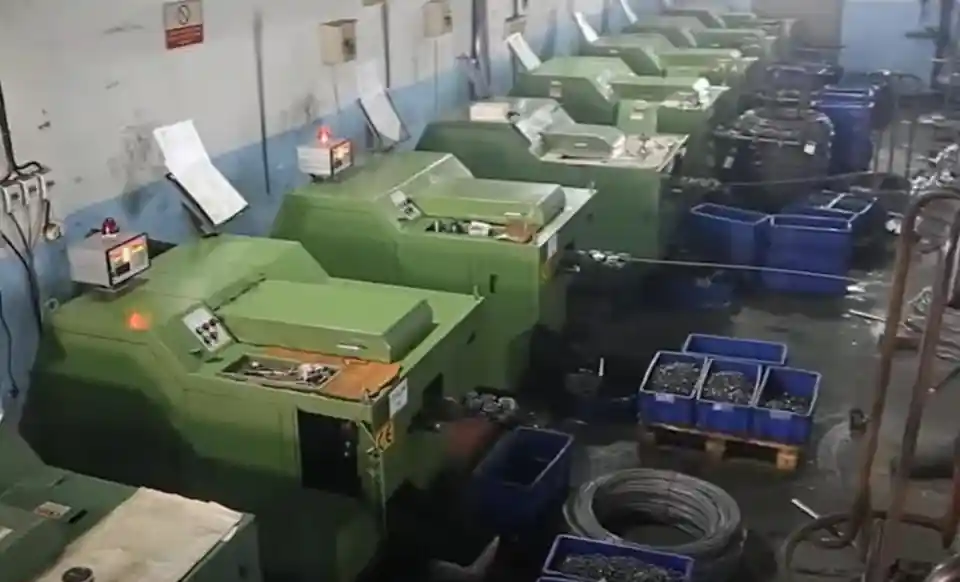
Socket Screw Manufacturer
TIGHTU manufactures and supplies socket screws for machinery, equipment, fixtures, panels, and space-limited assemblies. The product scope includes socket head cap, button head, flat head, low head, flange head, shoulder, and custom configurations.
Define the head style, internal drive, thread, length, material, finish, applicable standard, and assembly conditions for project review.
- Standard-based and drawing-based socket screw projects
- Multiple head, drive, material, and finish combinations
- OEM/ODM support based on drawings, samples, and application requirements
What Is a Socket Screw?
A socket screw uses an internal drive recessed into the head. The tool engages inside the screw rather than around an external hex head, making socket screws useful where radial tool clearance is limited.
“Socket screw” describes a broad family. A socket head cap screw has a cylindrical head, while button, flat, low, flange, and shoulder versions address different clearance, seating, bearing, and positioning requirements.
Correct selection depends on the head profile, drive, thread system, screw length, material, finish, mating component, and applicable standard or drawing.
Socket Screw Types
Choose the socket screw configuration according to the available headroom, required surface condition, bearing area, internal-drive access, thread engagement, and function of the assembled component.
Socket screws include both headed fastening screws and headless socket-driven set screws. This page focuses primarily on headed socket screw solutions, while socket set screws are included as a complementary option for locking, positioning, and adjustment applications.
Socket Head Cap Screws
The standard cylindrical head and recessed internal drive provide a compact fastening form for machinery and equipment assembly.
Selection points: metric or inch thread, head diameter and height, socket size, material, strength requirement, finish, and referenced standard.
Button Head Socket Screws
A rounded, lower-profile head provides a smooth visible surface and a broader head diameter than many standard cylindrical socket heads.
Selection points: head height, bearing area, drive size, available space, surface appearance, material, and finish.
Flat Head Socket Screws
The countersunk head seats inside a prepared recess, producing a flush or near-flush assembly surface.
Selection points: countersunk angle, head diameter, recess geometry, material thickness, drive size, and referenced standard.
Low Head Socket Screws
A reduced cylindrical head lowers the vertical space required above the assembly compared with a standard socket head cap screw.
Selection points: available headroom, socket depth, drive engagement, clamp requirement, material, thread engagement, and applicable standard.
Flange Socket Head Screws
An integrated flange increases the contact area beneath the head. Flange designs may be smooth or include application-specific serrations.
Selection points: flange diameter, smooth or serrated contact surface, head clearance, mating material, thread, finish, and joint requirements.
Socket Shoulder Screws
A socket shoulder screw includes a defined unthreaded shoulder between the head and threaded section. The shoulder can provide a locating, guiding, spacing, or pivot surface.
Selection points: shoulder diameter and length, thread, fit, mating component, head clearance, material, finish, and lubrication conditions where applicable.
Socket Set Screws
Headless, fully threaded screws driven through an internal socket. Commonly used for flush fastening, component positioning, shaft locking, and adjustment applications.
Selection points: TIGHTU can support socket set screw inquiries based on drawings, samples, material requirements, drive styles, and application needs.
Custom Socket Screws
Custom socket screws can be developed from a drawing, sample, or assembly requirement when a standard head, drive, thread, length, shoulder, material, or finish does not fit the application.
Selection points: controlled drawing, reference standard, critical dimensions, fit, material, finish, quantity, and application conditions.
Prevent Common Socket Screw Specification Mismatches
Head Style and Available Space
A standard cylindrical head may interfere with adjacent components, while a low head may provide less drive engagement than the assembly expects. Define both radial and vertical clearance before selecting the head.
Countersunk Screw and Mating Recess
A flat head socket screw must match the countersunk recess. Head angle, head diameter, recess depth, and material thickness should be defined by the applicable standard or drawing.
Drive Size and Tool Engagement
The tool must match the socket geometry and seat fully inside the drive. An incorrect key or bit can damage the recess and complicate assembly or removal.
Thread, Length, and Engagement
Metric and inch threads, or different pitches within the same nominal diameter, are not interchangeable. Screw length and available thread engagement must be coordinated with the tapped hole or nut.
Material, Strength, and Finish
Material and finish should be selected according to the joint, service environment, mating components, and specified mechanical requirements. Do not infer strength or corrosion performance from appearance alone.
Compare Socket Screw Configurations
| Configuration | Primary Difference | Suitable Selection Conditions | Important Checks |
|---|---|---|---|
| Socket head cap screw | Cylindrical head with a recessed internal drive | Machinery and equipment assemblies requiring compact radial tool access | Head clearance, socket size, thread, length, material, and standard |
| Button head socket screw | Rounded, lower-profile head with a broad visible surface | Assemblies where a smooth exposed head and reduced profile are preferred | Head height, bearing area, drive engagement, and clamp requirement |
| Flat head socket screw | Countersunk head for a flush surface | Panels, fixtures, and components with a prepared countersunk recess | Head angle, recess geometry, material thickness, and drive size |
| Low head socket screw | Reduced cylindrical head height | Assemblies with limited vertical clearance | Headroom, socket depth, drive engagement, thread, and load requirement |
| Flange socket screw | Integrated flange beneath the head | Assemblies requiring a broader head contact area | Flange diameter, serrations, mating surface, clearance, and finish |
| Socket shoulder screw | Defined unthreaded shoulder between head and thread | Locating, guiding, spacing, pivoting, and controlled-bearing applications | Shoulder diameter, shoulder length, fit, thread, and mating component |
| Socket set screw | Headless, fully threaded body | Locking, positioning, and adjustment applications | Point style, socket type, material, thread size, and mating surface |
| Custom socket screw | Drawing- or sample-based geometry | Nonstandard head, drive, thread, shoulder, material, finish, or length | Controlled drawing, critical dimensions, fit, quantity, and validation requirements |
This comparison provides a selection starting point. Final dimensions, strength requirements, thread engagement, tightening method, and material compatibility must be confirmed for the actual assembly.
Build a Complete Socket Screw Specification
| Specification Area | What to Define | Why It Matters |
|---|---|---|
| Product type | Standard cap, button, flat, low, flange, shoulder, or custom socket screw | Establishes the head geometry and assembly function |
| Standard or drawing | Applicable DIN, ISO, ANSI requirement, or controlled drawing | Defines the dimensional basis |
| Thread | Metric or inch system, diameter, pitch, length, and tolerance when specified | Must match the tapped hole or nut |
| Length | Nominal length and measurement convention for the selected head | Prevents confusion between overall and under-head length |
| Head | Diameter, height, countersunk geometry, flange, or custom profile | Determines clearance, seating, and bearing area |
| Internal drive | Hex socket, six-lobe, spline, pin-in socket, or another specified drive | Must match tooling, access, and security requirements |
| Shoulder | Diameter, length, fit, and surface requirement where applicable | Defines locating, guiding, pivoting, or spacing behavior |
| Material | Required material and grade | Must suit the specified mechanical and environmental requirements |
| Finish | Plating, coating, passivation, appearance, or another surface requirement | Must be coordinated with the base material and service environment |
| Mating component | Tapped hole or nut, mating material, thread depth, and available clearance | Confirms installation compatibility |
| Order information | Quantity, packaging, destination, and required documentation | Supports commercial and production review |
TIGHTU works with fastener materials including carbon steel, stainless steel, alloy steel, copper, brass, aluminum, nylon, and titanium. Material, grade, finish, and dimensional availability for a specific socket screw must be confirmed during quotation.
Select by Assembly Condition
| Assembly Condition | Selection Starting Point | Confirm Before Use |
|---|---|---|
| General machinery or equipment assembly | Socket head cap screw | Thread, length, head clearance, drive, material, and required standard |
| Smooth exposed head with reduced profile | Button head socket screw | Head height, bearing area, drive engagement, and clamp requirement |
| Surface must remain flush | Flat head socket screw | Countersunk recess, head angle, material thickness, and thread engagement |
| Limited vertical space above the fastener | Low head socket screw | Headroom, socket depth, tool engagement, and mechanical requirement |
| Broader contact area beneath the head | Flange socket screw | Flange diameter, serrations, mating surface, clearance, and finish |
| Locating, pivoting, guiding, or spacing function | Socket shoulder screw | Shoulder dimensions, fit, bearing surface, thread, and mating component |
| Standard screw does not match the assembly | Custom socket screw | Drawing, critical dimensions, drive, material, finish, quantity, and application |
Standard-Based and Custom Socket Screw Projects
TIGHTU manufactures fasteners according to DIN, ISO, and ANSI requirements and supports OEM/ODM projects based on customer drawings, samples, material requirements, and application conditions.
A standard designation is useful when the required head, thread, drive, length, and material are already defined. A controlled drawing is more appropriate when the screw includes a special head profile, reduced height, flange, shoulder, nonstandard drive, unusual material, or application-specific finish.
Include the following information when available:
- • Applicable standard or controlled drawing
- • Socket screw type
- • Metric or inch thread
- • Thread diameter, pitch, and length
- • Head dimensions and internal drive
- • Shoulder dimensions and fit where applicable
- • Material, grade, and finish
- • Mating component and available clearance
- • Critical dimensions or functional features
- • Required quantity and packaging
- • Inspection or documentation requirements
What TIGHTU Brings to a Socket Screw Project
Multiple Head Configurations
The product structure covers standard cylindrical, button, countersunk, low, flange, shoulder, and custom socket screw directions.
Specification Coordination
The head, internal drive, thread, length, shoulder, material, finish, mating component, and installation clearance can be reviewed as one connected specification.
Drawing- and Sample-Based Customization
When a standard socket screw does not match the assembly, TIGHTU can review customer drawings, physical samples, critical dimensions, and application requirements for OEM/ODM development.
Related Fastener Scope
TIGHTU’s broader product portfolio includes machine screws, SEMS screws, self-tapping screws, self-drilling screws, set screws, bolts, nuts, washers, threaded rods and studs, pins, rivets, and threaded inserts.
Fastener Manufacturing in Nantong, China
TIGHTU is a fastener manufacturer and supplier based in Nantong, Jiangsu, China. The company supplies standard and custom fastening products for customers in international industrial markets.
Socket screw projects can be reviewed around the applicable standard, controlled drawing, head, drive, thread, length, shoulder, material, finish, mating component, and installation requirement. Product-specific dimensions, material grades, mechanical requirements, inspection criteria, documentation, quantity, packaging, and delivery terms are confirmed for the quoted part.
Socket Screw Selection Guide
Quick Navigation
- Is a socket screw the same as a socket head cap screw?
- When should I choose a button head instead of a standard socket head?
- When is a flat head socket screw appropriate?
- What is the difference between a low head and a standard socket head?
- How should the internal drive be selected?
- When should I use a socket shoulder screw?
- What information supports a custom quotation?
Is a socket screw the same as a socket head cap screw?
A socket head cap screw is one type of socket screw. The broader socket screw family also includes button head, flat head, low head, flange head, shoulder, set, and custom configurations. This page keeps socket set screws in the separate Set Screws product direction.
When should I choose a button head instead of a standard socket head?
Choose a button head when a lower, rounded exposed profile is preferred and the available head diameter suits the assembly. Confirm the required clamp condition and drive engagement before substituting it for a standard cylindrical socket head.
When is a flat head socket screw appropriate?
Use a flat head socket screw when the mating component has a compatible countersunk recess and the installed surface must remain flush or nearly flush. Head angle, recess depth, material thickness, and referenced standard must match.
What is the difference between a low head and a standard socket head?
A low head reduces the space required above the fastener. The reduced head can also change socket depth and tool engagement, so it should not be selected only because the available space is limited.
How should the internal drive be selected?
Select the drive according to the applicable standard, available tool access, assembly equipment, security requirement, and required engagement. Use a correctly sized tool that seats fully in the recess.
When should I use a socket shoulder screw?
Use a socket shoulder screw when the assembly needs a defined unthreaded surface for locating, guiding, spacing, bearing, or pivoting. Shoulder diameter, length, fit, surface condition, and mating component are central to the specification.
What information supports a custom quotation?
Provide the drawing or standard, product type, thread, length, head, drive, shoulder dimensions where applicable, material, grade, finish, mating component, critical dimensions, quantity, packaging, and application conditions.
Related Fastener Options
Set Screws
Explore socket set screws and other set screw configurations for locking, positioning, and adjustment applications.
Machine Screws
Externally threaded screws designed to engage an existing tapped hole or nut.
SEMS Screws
Screws supplied with one or more retained washers for applicable assembly processes.
Custom Screws
Drawing- and sample-based development for nonstandard screw geometry, material, thread, drive, or finish requirements.
Micro Screws
Small fasteners for electronics, instruments, and compact assemblies.
Self-Tapping Screws
Screws that form or cut a mating thread in a compatible material.
Send Your Socket Screw Requirements
Share the information already available for your project. TIGHTU can use it to review the socket screw type, standard or custom scope, material requirements, and quotation details.