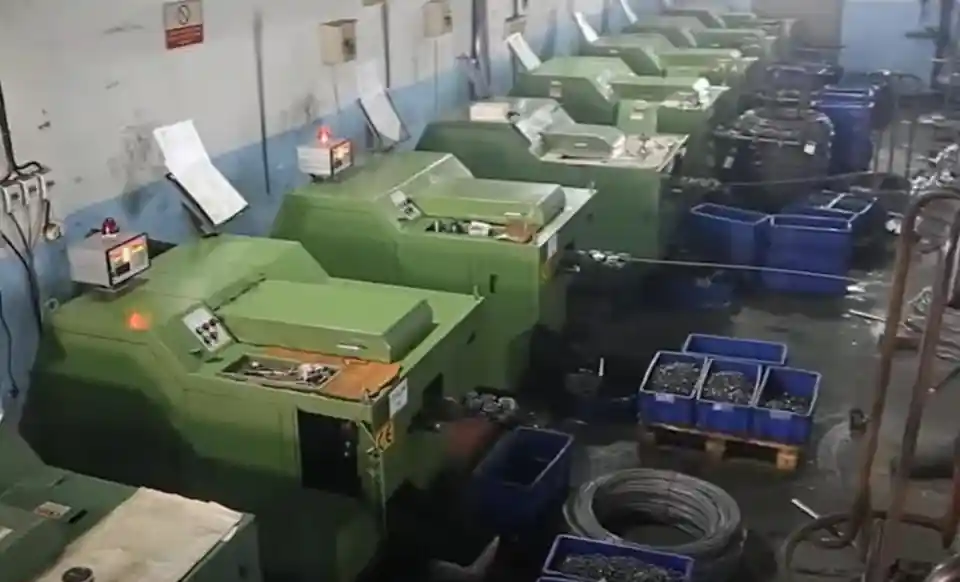
SEMS Screw Manufacturer
TIGHTU manufactures and supplies SEMS screws with captive washers preassembled on the screw. The product scope includes flat, split-lock, internal-tooth, external-tooth, conical, double, sealing, and custom washer configurations.
Define the screw, washer function, head and drive, thread, material, finish, mating surface, and assembly conditions for project review.
- Standard-based and drawing-based SEMS screw projects
- Single- and double-washer assembly configurations
- OEM/ODM support based on drawings, samples, and application requirements
What Is a SEMS Screw?
A SEMS screw is a screw-and-washer assembly in which one or more washers are retained on the screw. The washer is normally placed on the screw before the thread is rolled, allowing it to move while preventing it from separating during normal handling.
The preassembled construction can reduce the number of loose components handled during installation and helps ensure that the specified washer reaches the assembly point with the screw.
SEMS selection begins with the washer function. The screw head, drive, thread, washer geometry, material, finish, mating surface, and joint conditions must then be reviewed as one assembly.
SEMS Screw Types
Select the SEMS configuration according to the required bearing area, spring action, surface contact, washer retention, sealing interface, electrical-contact condition, and available space under the screw head.
Flat Washer SEMS Screws
A captive flat washer increases the bearing area under the screw head and can help distribute clamping force across the mating surface.
Selection points: washer outside diameter and thickness, head style, drive, thread, mating surface, material, and finish.
Split Lock Washer SEMS Screws
A captive split lock washer provides spring action within the joint and eliminates the need to handle the washer as a separate component.
Selection points: washer size, screw diameter, head clearance, material, finish, tightening method, and actual joint requirements.
Internal Tooth Lock Washer SEMS Screws
An internal-tooth washer places the teeth around the inside edge, providing a relatively compact outside diameter.
Selection points: tooth geometry, contact material, surface finish, head bearing area, electrical-contact requirements, and assembly conditions.
External Tooth Lock Washer SEMS Screws
An external-tooth washer places the teeth around the outside edge, creating a wider contact diameter beneath the screw head.
Selection points: washer diameter, mating surface, head size, coating, electrical-contact requirement, and installation method.
Conical Washer SEMS Screws
A conical washer provides spring deflection as it is compressed. The washer geometry and available compression space must match the joint design.
Selection points: washer profile, compression space, screw size, mating-surface stiffness, material, and finish.
Double SEMS Screws
A double SEMS assembly retains two washers on one screw. A common configuration direction combines a flat washer with a split lock washer.
Selection points: washer types, washer sequence, head clearance, thread length, mating surface, and assembly process.
Sealing Washer SEMS Screws
A sealing-washer SEMS assembly combines the screw with a retained washer intended to create an application-specific interface around the entry point.
Selection points: sealing material, contact surface, compression condition, temperature and media exposure, screw material, and finish.
Custom SEMS Screw Assemblies
Custom SEMS assemblies can combine a specified screw with one or more retained washers when a standard combination does not match the installation.
Selection points: controlled drawing, washer type and sequence, screw geometry, head and drive, thread, materials, finish, quantity, and application conditions.
Prevent Common SEMS Screw Specification Mismatches
Washer Function Is Not Defined
A flat washer, split lock washer, toothed washer, conical washer, and sealing washer perform different functions. Selecting only by screw size can produce an assembly that does not match the mating surface or joint requirement.
Washer Outside Diameter and Head Clearance
The washer must fit beneath the selected screw head and within the available installation space. External-tooth and large flat washers may require more radial clearance than internal-tooth or compact washer styles.
Screw and Washer Materials Are Incompatible
The screw, washer, mating component, and finish should be reviewed together. Material hardness, surface treatment, corrosion exposure, electrical-contact requirements, and dissimilar-metal contact can affect the joint.
Double-Washer Sequence Is Unclear
For a double SEMS assembly, washer type and order must be defined on the drawing or specification. The sequence affects how each washer contacts the screw head and mating surface.
Locking Performance Is Assumed
A lock washer does not guarantee that every joint will resist loosening. Joint design, preload, mating materials, vibration, installation method, and washer geometry must be evaluated for the actual assembly.
Compare SEMS Washer Configurations
| Configuration | Primary Function Direction | Suitable Selection Conditions | Important Checks |
|---|---|---|---|
| Flat washer | Increases bearing area and distributes contact under the head | Mating surfaces that benefit from a broader contact area | Washer diameter, thickness, surface condition, head size, and clearance |
| Split lock washer | Adds spring action to the assembly | Joints where a retained spring washer is specified | Washer size, compression, joint design, material, and installation method |
| Internal-tooth washer | Provides toothed contact with a compact outside diameter | Space-limited assemblies and specified surface-contact requirements | Tooth contact, coating, mating material, head bearing area, and electrical requirements |
| External-tooth washer | Provides toothed contact over a wider diameter | Assemblies with sufficient radial clearance | Outside diameter, surface contact, coating, head size, and installation conditions |
| Conical washer | Provides controlled spring deflection | Assemblies requiring a conical washer within available compression space | Washer profile, load direction, deflection space, and mating-surface stiffness |
| Double SEMS | Combines two retained washer functions | Assemblies requiring both bearing and spring-washer directions | Washer types, sequence, head clearance, thread length, and drawing definition |
| Sealing washer | Creates an application-specific interface around the entry point | Assemblies requiring coverage or sealing around the screw | Washer material, contact surface, compression, temperature, media, and finish |
| Custom SEMS | Matches a nonstandard screw-and-washer requirement | Drawings requiring special washer geometry, sequence, screw, material, or finish | Controlled drawing, critical dimensions, materials, quantity, and validation requirements |
This comparison provides a selection starting point. Final washer performance must be reviewed with the actual joint, mating materials, tightening method, environment, and applicable drawing or standard.
Build a Complete SEMS Screw Specification
| Specification Area | What to Define | Why It Matters |
|---|---|---|
| Screw type | Machine screw, tapping screw, self-drilling screw, or another approved screw form | Establishes the thread and installation method |
| Thread | Metric or inch system, diameter, pitch, length, and tolerance when specified | Must match the mating component |
| Head | Pan, hex, hex washer, socket, flat, truss, or custom head | Determines bearing area, clearance, and tool access |
| Drive | Phillips, slotted, hex, six-lobe, combination, or another required interface | Must match the installation tool |
| Washer function | Flat, spring, toothed, conical, sealing, or another specified function | Defines the purpose of the retained washer |
| Washer geometry | Inside diameter, outside diameter, thickness, tooth pattern, or spring profile | Controls fit beneath the head and contact with the mating surface |
| Washer sequence | Single washer or defined double-washer order | Prevents ambiguity in multi-washer assemblies |
| Materials | Screw, washer, and mating-component materials | Must suit forming, contact, environmental, and electrical requirements |
| Finish | Plating, coating, passivation, appearance, or other surface requirement | Must be coordinated across the screw and washer |
| Joint conditions | Mating surface, clearance, vibration, temperature, media, and electrical requirements | Connects the assembly to the actual application |
| Order information | Quantity, packaging, destination, and requested documentation | Supports commercial and production review |
TIGHTU works with fastener materials including carbon steel, stainless steel, alloy steel, copper, brass, aluminum, nylon, and titanium. Material and finish availability for a specific SEMS screw and washer combination must be confirmed during quotation.
Select by Assembly Requirement
| Assembly Requirement | Selection Starting Point | Confirm Before Use |
|---|---|---|
| Broader bearing area under the screw head | Flat washer SEMS screw | Washer diameter, mating surface, head clearance, and material |
| Captive spring washer required | Split lock washer SEMS screw | Joint design, washer compression, installation method, and vibration conditions |
| Compact toothed contact area | Internal-tooth SEMS screw | Tooth contact, coating, mating material, electrical requirement, and head geometry |
| Wider toothed contact area | External-tooth SEMS screw | Radial clearance, contact surface, coating, and installation conditions |
| Spring deflection from a conical washer | Conical washer SEMS screw | Washer profile, compression space, joint stiffness, and required deflection |
| Bearing and spring-washer functions combined | Double SEMS screw | Washer combination, sequence, head clearance, and thread length |
| Interface around the screw entry point | Sealing-washer SEMS screw | Sealing material, surface, compression, temperature, media, and finish |
| Standard combination does not match | Custom SEMS assembly | Drawing, washer sequence, critical dimensions, materials, quantity, and application |
Standard-Based and Custom SEMS Screw Projects
TIGHTU manufactures fasteners according to DIN, ISO, and ANSI requirements and supports OEM/ODM projects based on customer drawings, samples, material requirements, and application conditions.
For a SEMS assembly, the screw and washer must be specified together. The washer type, dimensions, sequence, material, and finish should be defined alongside the screw head, drive, thread, and mating surface.
Include the following information when available:
- Applicable standard or controlled drawing
- Screw type, head, drive, and thread
- Washer type and required function
- Washer dimensions or referenced standard
- Single- or double-washer configuration
- Washer sequence for double SEMS assemblies
- Screw and washer materials
- Surface finish or plating
- Mating surface and assembly conditions
- Required quantity and packaging
- Inspection or documentation requirements
What TIGHTU Brings to a SEMS Screw Project
Multiple Washer Configuration Paths
The product structure covers bearing, spring, toothed-contact, conical, double-washer, sealing, and custom assembly directions.
Screw-and-Washer Coordination
The screw head, drive, thread, washer function, washer geometry, material, finish, mating surface, and available space can be reviewed as one specification.
Drawing- and Sample-Based Customization
When a standard combination does not match the assembly, TIGHTU can review customer drawings, physical samples, critical dimensions, and application requirements for OEM/ODM development.
Related Fastener Scope
TIGHTU’s broader product portfolio includes machine screws, self-tapping screws, self-drilling screws, set screws, socket screws, bolts, nuts, washers, threaded rods and studs, pins, rivets, and threaded inserts.
Fastener Manufacturing in Nantong, China
TIGHTU is a fastener manufacturer and supplier based in Nantong, Jiangsu, China. The company supplies standard and custom fastening products for customers in international industrial markets.
SEMS screw projects can be reviewed around the applicable standard, controlled drawing, screw type, washer configuration, material, finish, mating surface, and assembly requirement. Product-specific dimensions, washer retention, inspection criteria, documentation, quantity, packaging, and delivery terms are confirmed for the quoted part.
SEMS Screw Selection Guide
How is the washer retained on a SEMS screw?
What is the difference between a SEMS screw and a screw supplied with a loose washer?
When should I choose a flat washer?
How do internal- and external-tooth washers differ?
Does a split lock washer guarantee resistance to loosening?
When is a double SEMS assembly useful?
What information supports a custom SEMS quotation?
Related Fastener Options
Machine Screws
Externally threaded screws designed to engage an existing tapped hole or nut.
Washers
Flat, locking, spring, sealing, and special washer directions for fastener assemblies.
Custom Screws
Drawing- and sample-based development for nonstandard screw geometry, material, thread, or finish requirements.
Self-Tapping Screws
Screws that form or cut a mating thread in a compatible material.
Self-Drilling Screws
Drill-point screws that create a pilot hole before forming the mating thread.
Micro Screws
Small fasteners for electronics, instruments, and compact assemblies.
Send Your SEMS Screw Requirements
Share the information already available for your project. TIGHTU can use it to review the screw, washer configuration, standard or custom scope, and quotation requirements.