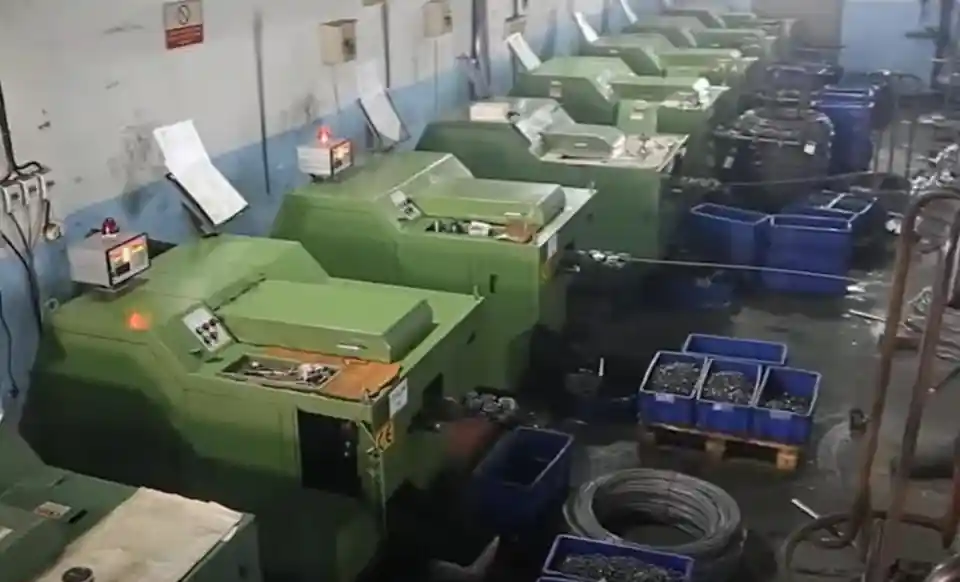
Micro Screw Manufacturers
TIGHTU manufactures micro screws for compact assemblies and drawing-defined fastening requirements. Our product scope includes micro machine screws, thread-forming and self-tapping screws, socket screws, set screws, low-profile designs, and custom configurations.
Dimensions, thread form, head and drive geometry, material, finish, critical tolerances, inspection requirements, and packaging should be confirmed against the applicable drawing, standard, and assembly conditions.
What Are Micro Screws?
Micro screws are small threaded fasteners used where thread diameter, head envelope, drive size, tool access, and installation space are tightly constrained.
The terms micro screw, miniature screw, and small screw do not have one universal size boundary across every industry. A controlled drawing, applicable thread standard, and mating-part design provide a more reliable product definition than a general size label alone.
TIGHTU manufactures standard and custom micro screws according to customer specifications and applicable DIN, ISO, or ANSI requirements. Each project should identify the required thread, dimensions, head and drive, material, finish, quantity, inspection scope, and packaging conditions.
For sourcing and quotation, define the actual thread designation and controlled dimensions rather than relying only on the term "micro screw."
Micro Screw Types
Select the product family by how the screw engages with the mating part, the available head space, the required drive access, and the function of the joint. Final dimensions and manufacturing feasibility are confirmed against the drawing or application requirement.
Micro Machine Screws
Designed for use with a pre-threaded hole or mating nut. Selection should define the thread designation and pitch, screw length, head and drive geometry, mating thread, material, and finish.
Selection Cues:
- Pre-threaded assembly
- Head and drive geometry
- Thread fit and engagement
Micro Thread-Forming & Self-Tapping Screws
Used where the screw forms or cuts a mating thread during installation. The base material, pilot-hole design, thread-forming or thread-cutting requirement, and installation method must be evaluated together.
Selection Cues:
- Mating material
- Pilot-hole conditions
- Thread-forming or cutting action
Micro Socket Screws
Internal-drive screws for assemblies where external wrench space is limited or controlled tool engagement is required. Confirm the head envelope, recess geometry, tool access, thread, and installation conditions.
Selection Cues:
- Internal drive
- Head-space limitation
- Tool and recess compatibility
Micro Set Screws
Headless screws used for locking, positioning, or adjustment in small shafts, gears, knobs, and precision mechanisms. Point style, contact surface, drive type, thread engagement, and adjustment requirements affect selection.
Selection Cues:
- Locking or positioning function
- Point and contact geometry
- Thread engagement
Low-Profile & Small-Head Micro Screws
Designed for assemblies with restricted head height, limited head diameter, or close component clearances. The available head envelope must be reviewed together with drive engagement, seating geometry, and clamping requirements.
Selection Cues:
- Maximum head height
- Maximum head diameter
- Seating and tool access
Custom Micro Screws
Made to a customer drawing, physical sample, or application-defined specification when a standard configuration does not fit. Custom requirements may involve geometry, thread, head, drive, point, material, finish, or critical dimensions, subject to technical review.
Selection Cues:
- Drawing- or sample-based production
- Non-standard geometry
- Application-defined requirements
Where Micro Screw Specifications Commonly Go Wrong
Small fasteners leave less room for ambiguity in the thread, recess, head envelope, mating hole, and finish. These points should be resolved before the part is released for quotation or production.
Unclear Size Definition
A request described only as a "micro screw" does not establish the actual thread or dimensions. Use a controlled drawing or specify the complete thread designation, length, head dimensions, and applicable standard.
Head and Drive Interference
A screw may fit the thread but still interfere with nearby components or provide insufficient tool engagement. Confirm the permitted head diameter, head height, recess geometry, and installation access.
Thread and Mating-Part Mismatch
Machine screws, thread-forming screws, and self-tapping screws interact differently with the mating part. Identify the mating material, hole condition, thread engagement, and installation method before selecting the screw type.
Finish and Tolerance Stack-Up
Surface treatment adds another variable to small features and threaded interfaces. Critical dimensions, finish requirements, and fit conditions should be defined together rather than treated as separate decisions.
Undefined Assembly Method
Driver fit, alignment, hole preparation, and installation control can influence stripping, cam-out, cross-threading, or incomplete seating. Assembly conditions should be validated on the actual components.
Compare Micro Screw Families
Swipe to view full table →
| Product Family | Threading Behavior | Typical Assembly Function | Key Selection Inputs |
|---|---|---|---|
| Micro Machine Screws | Engages with a pre-threaded hole or nut | Clamping and component fastening | Thread, length, head, drive, mating thread |
| Thread-Forming & Self-Tapping Screws | Forms or cuts a mating thread during installation | Direct fastening into a suitable workpiece | Base material, pilot hole, thread action, installation method |
| Micro Socket Screws | Uses an internal drive | Compact fastening with controlled tool engagement | Head envelope, recess, tool access, thread |
| Micro Set Screws | Headless threaded engagement | Locking, positioning, or adjustment | Point style, contact surface, drive, engagement |
| Low-Profile & Small-Head Screws | Uses a reduced head envelope | Fastening where clearance above or around the head is restricted | Head height, head diameter, seating, drive depth |
| Custom Micro Screws | Defined by drawing or sample | Non-standard or application-specific fastening | Complete geometry, material, finish, tolerances, quantity |
Head style and drive type are selection parameters that may apply across several product families. They should not be treated as interchangeable product definitions.
How to Specify a Micro Screw
A useful specification connects the fastener geometry to the mating part, installation method, operating environment, and inspection plan.
| Specification Area | What to Define | Why It Matters |
|---|---|---|
| Product family | Machine, thread-forming, self-tapping, socket, set, low-profile, or custom | Establishes how the screw functions in the joint |
| Thread | System, nominal designation, pitch, tolerance or fit requirement | Controls compatibility with the mating thread or hole |
| Length and engagement | Overall length, under-head length where applicable, and required engagement | Affects seating, clamping, and interference |
| Head geometry | Head style, diameter, height, bearing surface, and countersink where applicable | Determines clearance and load transfer |
| Drive or recess | Cross recess, slot, internal socket, hexalobular, or drawing-defined geometry | Determines tool compatibility and engagement |
| Point or end | Standard end, forming point, cutting feature, or set-screw contact geometry | Affects hole interaction, locking, and positioning |
| Material | Material family and required grade where applicable | Influences strength, corrosion behavior, conductivity, weight, and manufacturability |
| Finish | Surface treatment, appearance, and any controlled coating requirement | Influences environmental fit and dimensional interfaces |
| Critical dimensions | Drawing tolerances and features that affect assembly | Directs manufacturing and inspection attention |
| Inspection | Required checks, reports, samples, or documentation | Aligns product acceptance with project needs |
| Quantity and packaging | Required volume, identification, bagging, cartons, or project packaging | Supports manufacturing and quotation planning |
Material Selection for Micro Screws
TIGHTU works with carbon steel, stainless steel, alloy steel, copper, brass, aluminum, nylon, and titanium across its fastener portfolio. For a micro screw, material feasibility depends on the thread size, head and drive geometry, required mechanical properties, finish, mating material, and manufacturing route.
| Material Direction | Common Selection Reason | Points to Confirm |
|---|---|---|
| Stainless steel | Corrosion exposure and general industrial use | Exact grade, strength requirement, finish, and mating-material compatibility |
| Carbon or alloy steel | Mechanical requirements and finish flexibility | Grade, heat-treatment requirement, finish, and environmental exposure |
| Copper or brass | Conductivity or a non-ferrous material requirement | Required strength, thread behavior, finish, and mating materials |
| Aluminum or titanium | Weight or project-specific environmental requirements | Thread durability, galling risk, galvanic compatibility, and manufacturing feasibility |
| Nylon or engineering plastics | Electrical isolation, weight, or non-metallic assembly needs | Temperature, creep, load, thread engagement, and dimensional stability |
Material names alone do not define performance. State the required grade, finish, service conditions, mating materials, and applicable specification where these factors are critical.
Micro Screw Applications
Micro screws are selected where the complete assembly requires small threads, restricted head space, controlled tool access, or low component weight. Product fit must still be evaluated against the load, environment, mating material, and installation process.
Electronics & Electrical Assemblies
Small housings, brackets, connectors, control components, and compact electronic assemblies may require limited head dimensions and carefully matched drivers.
Instruments & Optical Equipment
Cameras, sensors, measuring devices, and optical mechanisms often require controlled screw geometry, repeatable positioning, and access within confined assemblies.
Compact Machinery
Small actuators, adjustment mechanisms, gears, fixtures, and miniature mechanical components may use machine screws, socket screws, or set screws according to the joint function.
Automotive Components
Electronic modules, controls, interior mechanisms, and compact subassemblies may require small fasteners defined by the component drawing and assembly process.
Custom Micro Screws Made to Drawing
When a standard micro screw does not match the assembly, TIGHTU can review a customer drawing, physical sample, or application specification for a custom manufacturing project.
A complete review may cover the thread, head and drive, length, point or end geometry, material, finish, critical tolerances, mating components, inspection requirements, quantity, and packaging.
Define the Part
Provide the controlled drawing, applicable standard, sample reference, or known dimensions.
Confirm the Application
Identify the mating material, hole or thread condition, installation method, available space, and critical function.
Review Manufacturing Requirements
Confirm material, geometry, finish, tolerance priorities, quantity, and any project-specific documentation.
Align Inspection and Packaging
State the dimensions, thread conditions, appearance points, reports, labeling, and packaging that must be controlled.
Why Source Micro Screws from TIGHTU?
Product Families Defined by Joint Function
The range covers pre-threaded fastening, direct thread formation, internal-drive fastening, locking and positioning, restricted-head-space designs, and drawing-defined custom parts.
Standard and Custom Requirements
Projects can begin with an applicable DIN, ISO, or ANSI reference or with a customer-controlled drawing, sample, and application requirement.
Multiple Material Directions
TIGHTU's broader fastener portfolio includes ferrous, non-ferrous, lightweight, and non-metallic material options. Final micro screw availability is confirmed according to the selected geometry and project conditions.
Drawing-Based Technical Confirmation
Thread, dimensions, head, drive, finish, critical features, inspection needs, and packaging can be reviewed together before the manufacturing requirement is finalized.
Related Fastener Supply
Micro screws can be discussed alongside machine screws, socket screws, set screws, self-tapping screws, SEMS screws, and other related fasteners when a project requires several fastening categories.
Manufacturing and Inspection Around the Agreed Specification
Based in Nantong, Jiangsu, China, TIGHTU manufactures and supplies fasteners for international industrial customers.
Micro screw projects require clear control of the product definition. Depending on the selected design, the manufacturing route may involve forming or machining, thread processing, surface treatment, dimensional inspection, and final packaging.
The drawing and purchase requirements should identify the features that matter to acceptance, including the thread, overall dimensions, head and recess geometry, material, finish, appearance, quantity, and packaging. Required reports or supporting documents should be requested during the quotation stage.
What is the difference between a micro screw and a miniature screw?
There is no single universal diameter that separates the two terms across every industry. Some suppliers use them interchangeably, while others define their own ranges.
For procurement, use the complete thread designation, dimensions, head and drive geometry, applicable standard, and drawing revision. These details provide a controlled definition even when naming conventions differ.
Should I use a micro machine screw or a self-tapping screw?
A machine screw normally engages with an existing internal thread or a mating nut. A self-tapping or thread-forming screw creates or shapes its mating thread during installation.
Choose between them by reviewing the mating material, hole preparation, thread engagement, ability to replace or service the screw, and the installation process. Do not substitute one type for the other only because the outer dimensions appear similar.
How should the head and drive be selected?
Begin with the available head diameter, head height, seating surface, and tool-access envelope. Then select a drive that provides compatible tooling and sufficient engagement for the installation process.
Pan, flat, small-head, low-profile, socket, and headless designs solve different spatial and functional requirements. The selected head must be evaluated with the complete assembly rather than as an isolated catalog feature.
How can thread stripping, cam-out, or cross-threading be reduced?
Use the correct driver, maintain alignment, confirm the mating thread or pilot hole, and establish an installation method suited to the screw and mating material.
There is no universal tightening value for every micro screw. Installation settings should be validated using the actual screw, mating parts, materials, finish, thread engagement, and assembly equipment.
What should a custom micro screw drawing include?
Include the complete thread designation, length, head dimensions, recess or drive geometry, point or end form, material, finish, critical tolerances, and applicable standards.
Also identify the mating material, assembly function, quantity, inspection requirements, packaging, and any features that must match an existing sample. A revision-controlled drawing helps keep quotation, manufacturing, and acceptance requirements aligned.
What inspection requirements should be specified?
Relevant checks may include overall dimensions, thread fit, head and recess geometry, point or end features, surface condition, material or finish documentation, and drawing-specific functional requirements.
The inspection scope should reflect the actual application and controlled drawing. Request any reports, samples, or documentation during quotation rather than assuming they are automatically included.
Can TIGHTU manufacture a custom micro screw from a sample?
TIGHTU can review a physical sample together with the available drawing, application information, material direction, quantity, and critical features.
A sample can provide a useful reference, but requirements that cannot be reliably determined from the sample should still be defined through a controlled specification before production.
Related Screw Solutions
Machine Screws
For fastening into pre-threaded holes or mating nuts across a broader range of assembly requirements.
Explore Machine Screw Solutions →Socket Screws
Internal-drive screws available in multiple head configurations for mechanical assembly.
Explore Socket Screw Solutions →Set Screws
Headless screws for locking, positioning, and adjustment applications.
Explore Set Screw Solutions →Self-Tapping Screws
Screws designed to form or cut mating threads in suitable materials.
Explore Self-Tapping Screw Solutions →SEMS Screws
Pre-assembled screw and washer combinations for applications that benefit from retained washer components.
Explore SEMS Screw Solutions →Custom Screws
Drawing- and sample-based screws for non-standard geometry or application requirements.
Discuss a Custom Screw Project →Request a Micro Screw Review
Send the drawing or the product information you already have. Include the product family, thread designation, dimensions, head and drive, material and finish, mating material, quantity, and any critical inspection or packaging requirements.
TIGHTU will review the request against the available manufacturing route before quotation.
Useful Information to Include
- Drawing, standard, or sample reference
- Product family and thread designation
- Length, head, drive, and point geometry
- Material and finish
- Mating material and assembly method
- Critical dimensions or inspection requirements
- Quantity and packaging needs
- Destination country or region